
Your business info is online in many places. But is it correct everywhere? Wrong info can hurt your local SEO. A local citation audit cleanup fixes that. This guide tells you how to do it step by step. Local citations are one of the simplest yet most effective ways to boost your business’s online visibility.
That’s where a local citation audit cleanup comes in. This guide explains everything you need to know—from understanding citations to performing audits and cleaning them up effectively.
What Is a Local Citation?
A local citation is any mention of your business online. It shows your name, address, and phone number. This is called your NAP. Citations appear on sites like Google, Yelp, and local directories. Search engines use them to trust your business.
There are two types of citations. Structured citations list your NAP in a clear format. Unstructured citations mention your business in a blog post or news article. Both types help your local SEO.
What Is a Local Citation Audit?
A local citation audit checks all your business listings online. You look for errors, missing info, or old data. You compare each listing to your correct NAP. The goal is to find what is wrong so you can fix it.
An audit shows you where your business appears online. It finds listings you did not even know you had. It also finds listings with wrong phone numbers, old addresses, or wrong business names.
What Is Citation Cleanup?
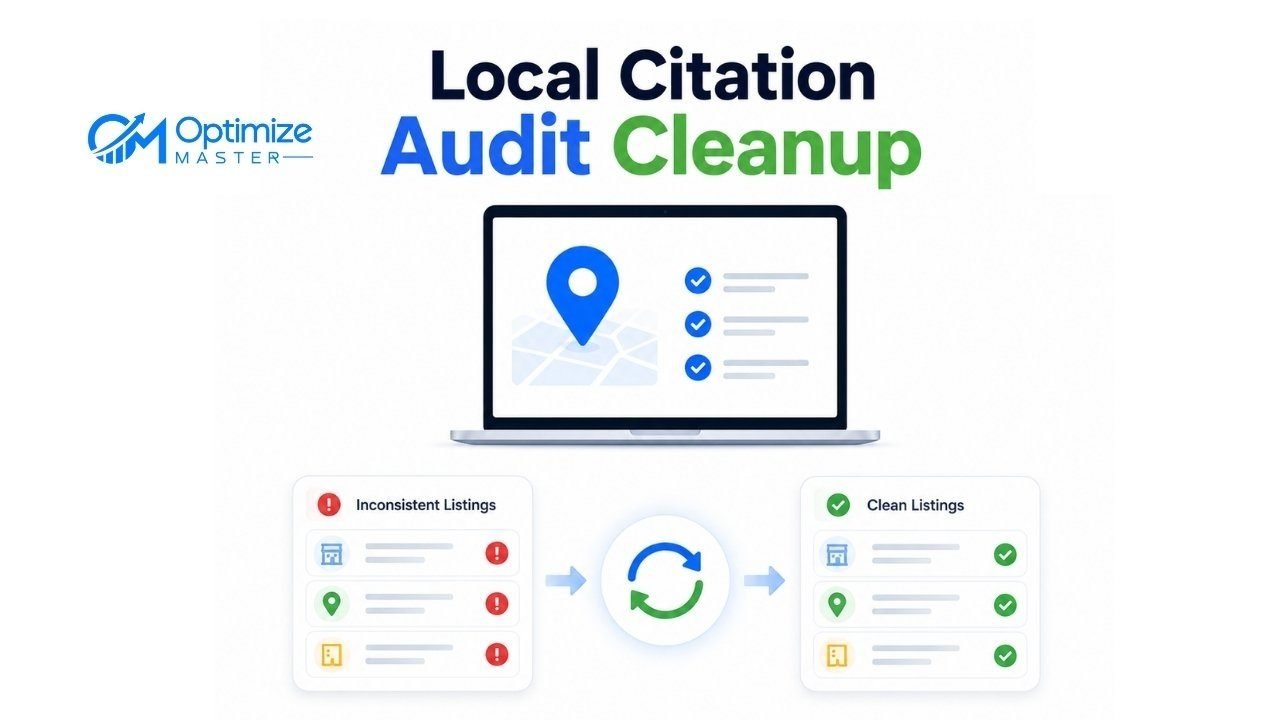
Citation cleanup is fixing the errors your citation audit cleanup found. You update wrong info. You remove duplicate listings. You add missing data. The goal is to make your NAP match everywhere it appears online.
Clean citations tell search engines your business is real and trustworthy. This helps you rank higher in local search results. It also helps customers find the right info about your business.
Why Local Citation Audit Cleanup Matters
Wrong citations confuse both customers and search engines. If your address is wrong, customers go to the wrong place. If your phone number is off, they cannot call you. Search engines may also rank you lower when your data does not match.
Google uses citation consistency as a ranking signal. The more your NAP matches across the web, the more Google trusts you. More trust means better local rankings. Better rankings mean more clicks, calls, and customers.
Common Citation Problems Found During an Audit
Here are the most common problems you will find:
- Wrong phone number from an old listing
- Old address after you moved locations
- Business name with spelling errors
- Duplicate listings on the same directory
- Missing website URL or hours
- Outdated business categories
- Closed or suspended listings
These errors are more common than you think. Even big brands have citation problems. A regular audit keeps them under control.
Local Citation Audit Checklist
Use this checklist when you run your audit:
- Confirm your correct NAP before you start
- List all directories where your business appears
- Check each listing for name accuracy
- Verify the address on each listing
- Confirm the phone number is current
- Check website URL is correct and working
- Look for duplicate listings on each site
- Note missing categories or business hours
- Record all errors in a tracking spreadsheet
Local Citation Audit Tools
Several tools make the audit process faster and easier. Here are the top ones to know:
| Tool | What It Does |
| BrightLocal | Scans 300+ directories and reports errors |
| Whitespark | Finds citation sources and tracks cleanup progress |
| Moz Local | Syncs NAP to major data aggregators |
| Semrush Listing Management | Manages and updates listings from one dashboard |
| Yext | Sends your NAP to many directories at once |
Free tools like Google Search and manual directory checks also work. Use them if you are on a tight budget. For large-scale work, paid tools save many hours.
Manual Citation Audit vs Automated Citation Audit
A manual audit means you check each directory one by one. This takes time but costs nothing. It works well for small businesses with few listings. You have full control over every update you make.
An automated audit uses software to scan hundreds of sites at once. It is faster and finds more errors. It is better for businesses with many locations or many listings. The cost is worth it for the time saved.
For most small businesses, a mix of both works best. Use a tool to find errors, then fix them manually on each site.
How Citation Cleanup Supports Local SEO
Consistent citations build trust with search engines. When Google sees the same NAP on many sites, it confirms your business is real. This boosts your Google Business Profile ranking. It also helps you appear in the local map pack.
Citation cleanup removes conflicting signals. Conflicting data makes Google less confident about your listing. Fixing that confusion directly improves your local search visibility.
Think of citations as votes for your business. Clean, matching votes count more. Wrong or duplicate votes cancel each other out.
Citation Audit Cleanup Report: What to Include
A good cleanup report helps you track progress and share results. Include these elements:
- Total citations found
- Number of accurate listings
- Number of listings with errors
- List of duplicates found and removed
- Directories where you were missing and have been added
- Before and after NAP data for each fix
- Date the audit was completed
- Next audit date recommendation
Local Citation Cleanup Priority Framework
Not all citations are equal. Focus on the most important ones first. Here is a simple priority order:
- Tier 1: Google Business Profile, Apple Maps, Bing Places
- Tier 2: Major directories like Yelp, Facebook, and TripAdvisor
- Tier 3: Data aggregators like Data Axle and Neustar Localeze
- Tier 4: Industry-specific directories for your niche
- Tier 5: Local or regional directories
Fix Tier 1 errors first. They have the most impact on your rankings. Work your way down as time and budget allow.
Local Citation Audit Cleanup for Multi-Location Businesses
Multi-location businesses face a bigger challenge. Each location needs its own set of accurate citations. A wrong address for one location can hurt all of them.
Use a location management tool like Yext or Moz Local to handle this at scale. Create one data profile per location. Make sure each profile has a unique address and phone number. Never use one phone number for all locations.
Run an audit for each location separately. This takes more work but gives cleaner results. Keep a separate tracking sheet for each location.
Mistakes to Avoid During Citation Cleanup
These common mistakes can slow down your cleanup or make things worse:
- Changing your NAP format midway through the process
- Deleting listings instead of updating them
- Using a toll-free number instead of a local number
- Using a PO Box as your business address
- Skipping data aggregators and only fixing top directories
- Not verifying listings after you update them
- Forgetting to update your website to match your new NAP
Local Citation Audit Cleanup Service: Who Needs It?
Any local business that wants to rank higher in local search can benefit. But some businesses need it more than others:
- Businesses that have moved locations
- Businesses that changed their phone number
- Businesses that rebranded or changed their name
- New businesses trying to build a strong citation foundation
- Businesses that bought or merged with another company
- Any business that has never run a citation audit before
If you have not checked your citations in over six months, it is time for an audit.
Step-by-Step Local Citation Audit Cleanup Workflow
Follow these steps for a complete and effective cleanup:
- Step 1: Write down your correct NAP. Include exact formatting.
- Step 2: Use a tool like BrightLocal or Whitespark to scan for all citations.
- Step 3: Export the results to a spreadsheet.
- Step 4: Mark each citation as correct, needs update, or needs removal.
- Step 5: Fix your Google Business Profile first.
- Step 6: Update Tier 1 directories one by one.
- Step 7: Submit correct data to the major data aggregators.
- Step 8: Work through Tiers 2 through 5.
- Step 9: Remove or merge all duplicate listings.
- Step 10: Verify every listing after you update it.
- Step 11: Create your cleanup report.
- Step 12: Schedule your next audit in 3 to 6 months.
Frequently Asked Questions (FAQ)
What are local citations?
Local citations are any online mentions of your business name, address, and phone number. They appear on directories, websites, and apps. They help search engines verify and rank your business in local search.
What is citation building?
Citation building is the process of creating new listings for your business on online directories and websites. The goal is to increase your business presence across the web with accurate and consistent NAP data.
What is the difference between structured and unstructured citations?
Structured citations appear in a set format on directory sites like Yelp or Google. Unstructured citations are mentions of your business in blog posts, news articles, or social media. Both are valuable for local SEO.
How do local citations impact local SEO?
Citations help search engines confirm your business details. Consistent citations build trust with Google. More trust improves your ranking in local search and the Google local map pack.
How many citation sites should a local business be listed on?
There is no fixed number, but most experts suggest being listed on 50 to 100 quality sites. Focus on accuracy over quantity. Fewer clean citations are better than many incorrect ones.
What is citation management?
Citation management is the ongoing process of monitoring, updating, and maintaining your business listings across the web. It ensures your NAP stays accurate as your business changes over time.
Can I build local citations myself?
Yes, you can build citations manually by submitting your business info to directories one by one. It takes time but costs nothing. Tools like Moz Local or Yext can speed up the process if you have a larger budget.
What are citation opportunities?
Citation opportunities are directories or websites where your competitors are listed but you are not. Finding these gaps and filling them can help you gain a competitive edge in local search rankings.
How do I find the best citation sources for my business?
Start with Google Business Profile, Yelp, and Bing Places. Then look for industry-specific directories. You can also check where your top local competitors are listed and target those same sites.
What is a citation audit?
A citation audit is a full review of your business listings across the web. It checks for errors, duplicates, and missing data. The goal is to identify every citation that needs to be fixed or improved.
What is local citation cleanup?
Local citation cleanup is the process of fixing errors found in a citation audit. You update wrong data, remove duplicates, and fill in missing information. The result is a consistent and accurate presence across all directories.
How long does citation cleanup take?
The time depends on how many listings you have and how many errors exist. A basic cleanup for a small business may take a few days. A large multi-location business may need several weeks. Automated tools can significantly reduce the time needed.